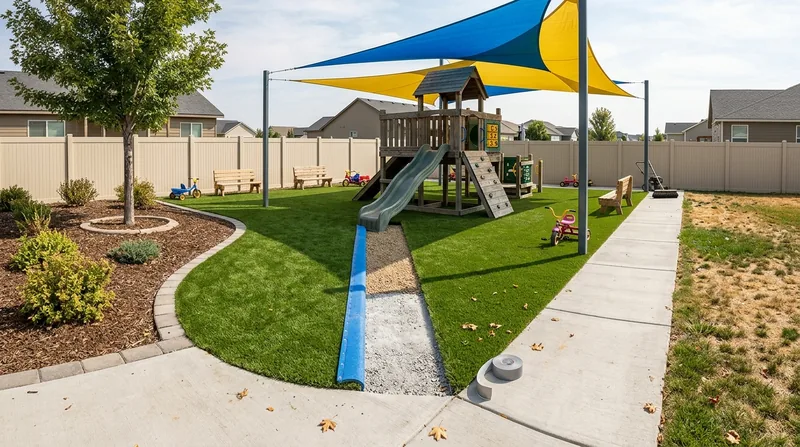




Playground and school turf in Twin Falls demands surfaces that stand up to heavy use, extreme temperature swings, and the wear patterns of children and athletes. The Magic Valley's high-desert climate, with hot dry summers and cold winters, means playground surfaces experience freeze-thaw cycles, intense UV exposure, and rapid temperature changes that damage inferior turf within a single season. Schools and recreation districts across Twin Falls, Jerome, Kimberly, and Buhl need turf that absorbs impact, resists staining and odor, drains fast through Idaho's spring snowmelt, and stays playable year-round without the maintenance burden of natural grass. We install synthetic turf systems built for playgrounds and schools, with engineered backing, proper infill depth, and fall-height cushioning that meets safety standards. Since 2013, we've specified turf by face weight, pile height, and infill type in writing so you know exactly what's going down.
Why Playground and School Turf Matters in Twin Falls
Twin Falls schools and parks sit in an environment where natural grass thins under intense summer sun and freezes solid through winter. Playground turf must handle foot traffic from hundreds of children daily, resist compaction and bare spots, drain snowmelt without pooling, and provide consistent impact absorption for safe landings. Natural sod fails fast in these conditions, and the cost of replanting every two to three years, plus the liability exposure when worn grass offers poor fall protection, makes artificial turf a practical choice for districts managing tight budgets and high-use facilities.
- We install fall-rated turf with engineered padding that absorbs impact and meets ASTM safety standards for playground surfaces.
- Proper base preparation and infill depth prevent compaction and maintain cushioning through years of heavy use.
- Turf drains fast through spring snowmelt and stays dry in the high-desert climate without creating mud or pooling.
- We specify face weight and pile height in writing so schools and districts know the exact product and durability they are getting.
- Low-maintenance turf reduces staff time spent on mowing, watering, and seasonal repairs that divert budget from instruction.
Choosing a turf installation company that understands playground safety standards and local drainage patterns ensures your investment protects children and serves the district for a decade or more.
Key info: Schools in Twin Falls and Burley can contact the Idaho Department of Education and Workforce for guidance on facility improvement grants and capital project planning timelines. We work with districts on phased installations that fit budget cycles and academic calendars.
For more context on turf specifications and performance standards, see the ASTM F1292 standard for playground impact attenuation, which governs fall height ratings and cushioning requirements.
How We Install Playground and School Turf in Twin Falls
Playground turf installation in Twin Falls starts with a site visit to assess drainage, soil conditions, and the specific use patterns of the facility. We remove old turf or sod if needed, grade to prevent water pooling, and compact the base to support consistent infill depth and impact absorption. The turf is then laid with seams staggered away from high-traffic zones, and infill is spread and settled to the engineered depth specified for the fall height rating. Every step is documented in writing so the school or district has a record of what was installed and why.
- We evaluate drainage patterns and amend soil or add subsurface drainage if spring snowmelt or irrigation runoff poses a risk.
- Base is compacted to the depth and density required to support the infill and prevent settling or bare spots over time.
- Turf is cut and seamed by hand, with seams positioned away from the highest-traffic areas like swing zones and slide landings.
- Infill is applied at the depth specified for the fall height rating, then worked and settled so it stays uniform under foot traffic.
- We provide a written record of the turf specification, base depth, and infill type so you have proof of what was installed.
This methodical approach prevents the shortcuts that leave playgrounds with bare patches, poor drainage, or inadequate cushioning within months.
Example: A school near Pole Line Road in Twin Falls had a worn natural grass play area that stayed muddy through spring and bare in August. We removed the old sod, graded for drainage, and installed fall-rated turf with a 2-inch engineered base pad and crumb rubber infill rated for 8-foot fall height. The playground stayed dry through snowmelt and playable year-round without staff time spent on watering or reseeding.
See our turf repair service for maintenance and spot fixes once your playground is in place.
Installation Methods for Playground and School Turf
| Approach | Description | Best for |
|---|---|---|
| Full-depth replacement with engineered base | Remove existing turf or sod, amend soil, compact base to 4-6 inches, install fall-rated turf with engineered pad and infill at rated depth. | New playgrounds, major renovations, areas with poor drainage or heavy use. |
| Overlay on stable base | Install turf and infill over an existing compacted base if soil and drainage are sound and no removal is needed. | Existing asphalt or concrete play areas, quick conversions, budget-conscious districts. |
| Phased installation by zone | Install turf in phases, one playground or court section at a time, so the facility stays partly operational during work. | Large schools or districts that cannot close entire facilities, multi-use recreation areas with staggered schedules. |
| Integrated drainage system | Install subsurface drainage layer, gravel bed, and turf when snowmelt or high water table threatens pooling and infill saturation. | Twin Falls canyon-rim areas, spring flood zones, facilities near irrigation canals. |
Each method is chosen based on the site's existing conditions, the school's operational needs, and the budget timeline. We always recommend an on-site estimate before committing to an approach.
Playground and School Turf Cost in Twin Falls: What to Expect
Playground and school turf costs in Twin Falls start at around $10 to $15 per square foot for a complete installation with base preparation, fall-rated turf, engineered padding, and infill. A typical elementary school playground of 3,000 to 5,000 square feet runs $30,000 to $75,000 depending on the existing conditions, drainage requirements, and fall height rating needed. Factors that affect price include the depth and condition of the existing base, soil amendments or drainage work required for spring snowmelt, the specific turf face weight and pile height, and the infill type (crumb rubber, engineered infill, or hybrid systems). Getting written estimates from two or three installers ensures you understand what's included and can compare apples to apples.
See our full pricing guide for detailed cost breakdowns and factors that influence the final quote. Site-specific variables like access for equipment, soil conditions, and drainage needs mean every estimate is measured on location, never guessed from photos.
Playground and School Turf Near Me: What Twin Falls Homeowners and Districts Should Know When Hiring
When hiring a turf installation company for a school or recreation facility, start by verifying they carry full insurance with general liability and workers' compensation coverage, and ask to see a certificate. Request a written specification that names the turf product, face weight, pile height, infill type and pounds per square foot, and the base depth and compaction method. Ask for references from other schools or parks they have worked with, and request photos of finished installations in your climate zone so you can see how the turf holds up through Twin Falls winters and summers. Understand that HOA architectural rules may not apply to schools or public facilities, but city or county permits may be required for grading work or drainage changes, so always confirm with the local building department before starting.
- Verify that the installer carries full insurance and can provide a certificate naming general liability and workers' compensation coverage.
- Get a written specification in advance that details the turf product, face weight, pile height, infill type and depth, and base preparation method.
- Ask for local references from schools or parks where they have installed playground turf, and follow up with site visits or calls.
- Confirm with the Twin Falls or county building department whether permits are required for base work, drainage, or grading on your site.
- Understand that fall height ratings and impact attenuation are governed by ASTM standards, so the installer should explain how the turf and padding meet the standard for your playground zone.
A local, independent turf installation company that names the product and base depth in writing and can show you finished work in Twin Falls' high-desert climate is your best assurance that the playground will be safe and playable for years to come.
Ready to get started? Contact us for a free estimate. We respond within 24 hours and can schedule a site visit at your school or recreation facility in Twin Falls, Jerome, Kimberly, Buhl, Burley, Rupert, Heyburn, or surrounding areas.
Playground & School Turf in Twin Falls: Pricing Guide
| Service | Price | Details |
|---|---|---|
| Elementary playground, 2,000-4,000 sq ft | Starting at $10/sq ft | Full base prep, fall-rated turf, engineered pad, infill at rated depth, seaming and settling included |
| High school athletic field or multi-use court | Starting at $12/sq ft | Enhanced base compaction, drainage layer for spring snowmelt, higher face weight turf, premium infill for durability |
| Complex site with drainage or soil amendment | On estimate | Subsurface drainage, soil remediation, grading for slope, or phased installation require on-site assessment before pricing |
| Travel and site visit | Included | No mileage fee or separate call-out charge within Twin Falls and surrounding service areas |
| Free estimate | No obligation | Response within 24 hours at (208) 595-5012, written quote with product specs and base depth included |
Indicative pricing, the exact cost depends on square footage, finish, and site access. Free personalized estimate within 24h at (208) 595-5012.


