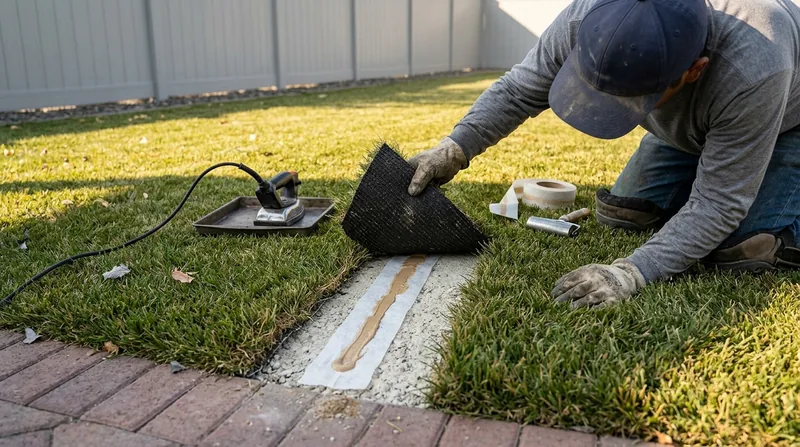




Artificial turf in Twin Falls backyards takes a beating. The high desert sun, freeze-thaw cycles through winter, and heavy foot traffic from kids and pets wear seams, flatten pile, and open edges. When your turf repair and seam repair work falls to us, you get a local crew that knows exactly what failed, why it failed, and how to fix it right the first time. We have been repairing and maintaining synthetic turf across the Magic Valley since 2013, and we understand the specific climate stresses that damage turf here: intense UV, temperature swings from 0°F to 95°F, wind-driven debris, and the sharp basalt edges that border our canyon-rim yards. Whether a seam is separating, pile is crushed in a high-traffic lane, or an edge has lifted after settling, we assess the damage on site, specify the repair method and materials in writing, and execute the work to the same standard we use for new installation. Our goal is to extend the life of your turf investment and restore its appearance and drainage without wholesale replacement.
Why Seam and Edge Failure Happens in Twin Falls Yards
Turf seams are glued together in the factory or on site, and that adhesive has limits. In Twin Falls, the combination of intense summer heat (surface temps can exceed 140°F in direct sun), the freeze-thaw stress of our 20-degree winter swings, and heavy use creates conditions that test every seam. Edges lift when base preparation is incomplete, when drainage pools and freezes beneath the turf, or when foot traffic concentrates at entry points. Pile flattens in dog runs, along high-traffic pathways, and under furniture that sits in one spot through the season. UV exposure degrades the yarn over time, and the dry air and wind of the Magic Valley accelerate that process. Understanding why the damage occurred is the first step to preventing it from happening again.
- Seam separation occurs when adhesive fails under thermal stress, UV exposure, or ground movement beneath the turf.
- Edge lifting happens when base compaction is poor, drainage is inadequate, or the edge was not secured properly during installation.
- Pile flattening results from concentrated foot traffic, furniture weight, or inadequate infill depth in high-use zones.
- Melt spots and small burns occur when window reflections concentrate sunlight or debris ignites under extreme heat.
- Drainage failure and odor retention develop when infill becomes compacted or contaminated, requiring deep cleaning or infill replacement.
Each failure mode has a specific repair path, and getting the diagnosis right is half the job.
Key info: In Twin Falls neighborhoods like Morningside and Canyon Rim, we see seam failure most often in yards where the turf was installed over inadequate base or where drainage was not addressed before laying the turf. Winter freeze-thaw cycles then work the seam open. On the east side near Jerome and Kimberly, the dry wind and intense sun compound UV damage to older turf. Early repair prevents a small seam from becoming a full replacement job.
How We Diagnose and Repair Turf Damage in Twin Falls
Repair starts with a clear diagnosis. We visit your yard, photograph the damage, probe the base and infill, check drainage, and assess whether the repair is a seam re-glue, a patch, an edge re-secure, or a full section replacement. We then write down the scope, the materials we will use (turf product, adhesive type, infill if needed), and the method. We do not guess or use a one-size-fits-all approach. Small repairs often happen within 2 to 5 days of the estimate; larger jobs are scheduled according to your calendar and the weather forecast, because we do not glue seams in rain or freeze conditions.
- We inspect the damaged area and the surrounding turf to identify the root cause of the failure.
- We assess base condition, drainage, and infill depth to determine whether the repair will hold or whether underlying prep is the real problem.
- We write a repair specification including turf product, adhesive, infill type and rate, and method.
- We remove damaged turf or seams using a seam cutter and carefully peel back the material without tearing good turf.
- We clean the base, repair or re-compact it if needed, and regrade for drainage.
- We cut and fit replacement turf or re-glue the existing pieces using marine-grade polyurethane adhesive and a roller to ensure contact.
- We top-dress infill into the repaired zone to match the surrounding turf and restore cushioning and drainage.
- We test the seam and the drainage, clean up, and photograph the finished work.
The entire process is transparent, and you see the before, during, and after photos. For more information on how we approach installation and the standards we use, visit our page on residential artificial grass installation in Twin Falls.
Example: A homeowner in Twin Falls (83328) noticed a seam opening along a dog run after two winters. The base under the seam had settled and cracked, and water pooled there in spring. We re-compacted the base, re-glued the seam with a heavy-duty adhesive, and added a layer of drainage rock beneath that section. The repair held through the next winter and kept the seam dry.
Turf Repair Methods: When to Patch, Re-Glue, or Replace
| Repair Approach | Description | Best For |
|---|---|---|
| Seam Re-Glue | Remove old adhesive, clean the seam, apply new marine-grade polyurethane, and roll the pieces together. No replacement material needed. | Seams that are separating but the turf on both sides is still intact and not damaged. |
| Patch Repair | Cut out the damaged section in a rectangular or square shape, prepare the base, and glue in a matching piece of turf. Seams are sealed and infilled to blend. | Localized burns, melt spots, small tears, or crushed pile in a confined area under 20 square feet. |
| Edge Securement | Lift the edge, inspect and repair the base underneath, re-grade for drainage, and re-secure the edge with adhesive and landscape staples or nails. | Edges that have lifted or curled, especially along fence lines or patio borders where foot traffic concentrates. |
| Section Replacement | Remove a large section of damaged or worn turf, prepare the base, and install new turf with new seams and infill. Used when damage is extensive or base repair is required. | Multiple seam failures, widespread pile damage, large melts, or when base work is needed to prevent future failure. |
| Infill Refresh and Deep Clean | Remove compacted or contaminated infill, deep-clean the turf pile, and add fresh infill to restore cushioning, drainage, and odor control. | Turf that is flat, retains pet odor, or has poor drainage, but the turf itself is sound and the seams are intact. |
The right method depends on the size of the damage, the condition of the base, and whether the turf itself can be salvaged. We assess this on site and recommend the most cost-effective repair that will actually last.
Turf Repair and Seam Repair Cost in Twin Falls: What to Expect
Repair pricing depends on the scope. A simple seam re-glue on a short run of turf starts at around $350 to $500, while a patch repair for a small burn or tear runs $400 to $750. Larger section replacements, edge work that requires base repair, or infill refresh jobs scale up from there. Access matters: if we can bring equipment close to the repair zone, the cost stays lower. If the yard is tight, fenced, or the damage is deep in a corner, labor increases. The best way to know your price is to call us at (208) 595-5012 for a free, no-obligation site estimate. We will look at the damage, ask questions about what caused it, and give you a written quote with the repair method and materials spelled out. For a fuller overview of our pricing structure and typical costs for common jobs, see our pricing page.
Turf Repair and Seam Repair Near Me: What Twin Falls Homeowners Should Know Before Hiring
Not all turf repair crews are equal. Some lay down new adhesive over old, ignore base problems, or use cheap materials that fail again within a year. When you are looking for a turf installer or repair company near Twin Falls, look for three things: a certificate of insurance naming general liability and workers' compensation coverage, a written specification of the repair method and materials (turf product, adhesive type, infill, base depth), and references or photos of finished work in the Twin Falls area. Ask whether they have assessed the root cause of the damage or if they are just patching over the symptom. If a seam failed because the base settled, re-gluing the seam without fixing the base is a waste of money. Ask about the adhesive they use, the infill they will add, and how long they expect the repair to hold. If they cannot answer those questions clearly, keep looking. For more guidance on vetting any turf installer, contact us to discuss your repair and get a free estimate from a crew that has been doing this work locally since 2013.
When to Repair Versus When to Replace
Sometimes repair is the right answer. Sometimes it is not. If your turf is less than 5 years old and the damage is confined to one or two small areas, repair makes sense and will save money. If the turf is 10 or more years old, the pile is widely flattened, seams are failing in multiple places, or drainage is failing across the yard, replacement may be the better long-term investment. We will tell you honestly which path makes sense for your yard. A repair that extends the life of good turf by 3 to 5 years is a win. A repair that fails again in six months is a waste. Our job is to give you clear information so you can decide. If you want to explore full replacement or a conversion from real grass to artificial turf, we handle that too. Visit our turf removal and replacement page to learn more.
Turf Repair & Seam Repair in Twin Falls: Pricing Guide
| Service | Price | Details |
|---|---|---|
| Seam Re-Glue | Starting at $350 | Includes adhesive removal, cleaning, and re-gluing with marine-grade polyurethane. Price depends on seam length and access to the area. |
| Patch Repair (Small) | Starting at $400 | Covers removal, base prep, and installation of matching turf patch up to 20 square feet. Material match and infill blending included. |
| Edge Securement and Base Repair | Starting at $500 | Includes lifting edge, inspecting and re-compacting base, re-grading for drainage, and re-securing with adhesive and fasteners. |
| Section Replacement or Complex Repair | On estimate | Large-scale damage, widespread base issues, or multiple seam failures require site assessment to determine scope and cost accurately. |
| Infill Refresh and Deep Clean | Starting at $450 | Deep cleaning, infill removal and replacement, and odor treatment for turf with good structure but poor drainage or odor retention. |
| Free Estimate | No charge | Response within 24 hours at (208) 595-5012. We inspect, diagnose, and provide a written repair specification before you decide. |
Indicative pricing, the exact cost depends on square footage, finish, and site access. Free personalized estimate within 24h at (208) 595-5012.


