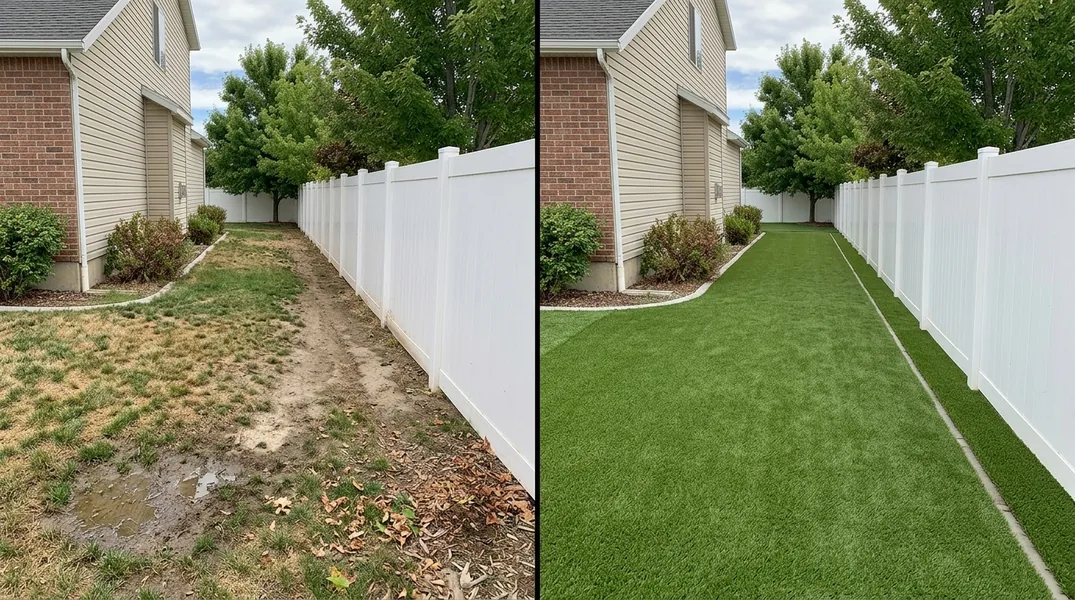
The Twin Falls Climate Challenge: Why Real Grass Struggles
Twin Falls sits in one of Idaho's most demanding landscapes. The region experiences scorching summers with temperatures regularly exceeding 90 degrees Fahrenheit, brutal winters with heavy snow, and persistent wind that dries out soil faster than most homeowners can water. These conditions create a perfect storm for real lawn failure.
Real grass in Twin Falls faces constant stress. During August, when temperatures peak, cool-season grasses like Kentucky bluegrass and perennial ryegrass enter dormancy or burn out entirely. The "August burn" phenomenon is so common that many residents simply accept brown, dead patches as inevitable. Winter brings its own challenges: freeze-thaw cycles damage root systems, heavy snow compacts soil, and spring runoff creates erosion problems. Meanwhile, the region's average annual wind speeds accelerate moisture loss, forcing homeowners to irrigate constantly just to keep grass alive.
This climate reality has driven many Twin Falls homeowners toward alternatives. Residential Artificial Grass Installation has become increasingly popular because it eliminates the guesswork and frustration of fighting nature.
Turf vs Real Lawn: The Honest Maintenance Comparison
When comparing turf versus artificial grass, maintenance costs and time commitments reveal a dramatic difference. Real grass demands constant attention: weekly mowing from spring through fall, regular fertilizing, weed control, aeration, overseeding, and pest management. In Twin Falls' climate, you're also fighting irrigation challenges. During dry spells, you'll need to water deeply and frequently to prevent drought stress. During wet seasons, you risk fungal diseases and root rot. This ongoing cycle consumes hundreds of hours annually and generates significant water bills.
Artificial turf requires virtually none of this. There's no mowing, no fertilizing, no weeding, and no irrigation needed for plant health. The only maintenance is occasional rinsing to remove dust and debris, and perhaps brushing to keep the pile upright. Most homeowners spend fewer than five hours annually on artificial grass maintenance, compared to 100+ hours for real lawns. This time savings alone justifies the switch for busy families and professionals who value their weekends.
Water consumption tells an even more compelling story. Real grass in Twin Falls typically requires 1 to 1.5 inches of water weekly during growing season, whether from rainfall or irrigation. Over a typical 5,000-square-foot lawn, that's roughly 37,000 to 56,000 gallons monthly. Artificial turf uses zero water for plant sustenance. For environmentally conscious homeowners concerned about drought tolerance and sustainable landscaping, this difference is transformative.
Xeriscaping and Drought-Tolerant Landscaping: Where Artificial Grass Fits
Xeriscaping is a landscape design philosophy focused on reducing water consumption through plant selection and hardscaping. It's become essential in the American West, where water scarcity is increasingly real. Artificial turf is a cornerstone of modern xeriscaping strategies because it provides the aesthetic and functional benefits of grass without the water demand. In Twin Falls, where water conservation matters, choosing artificial grass is choosing sustainability.
Drought-tolerant landscaping often combines artificial turf with native plants, rock features, and mulch to create visually appealing yards that thrive with minimal intervention. Homeowners can install Residential Artificial Grass Installation in high-traffic areas while surrounding it with native shrubs, ornamental grasses, and drought-resistant perennials. This hybrid approach delivers the best of both worlds: a soft, usable play and recreation area plus authentic native plantings that support local ecosystems.
The psychological benefit shouldn't be overlooked either. Real grass that turns brown in August creates a sense of failure and frustration for homeowners who've invested time and money. Artificial turf stays green year-round, providing visual consistency and pride in your landscape regardless of season or weather extremes. For families with children or pets, this reliability means the yard remains functional and inviting even during Twin Falls' harshest months.
Artificial Grass vs Real Grass: Durability and Longevity
Modern artificial grass is engineered to withstand extreme weather. Quality turf products are UV-stabilized to resist fading under intense sun, backed by warranties of 10 to 15 years, and designed to handle freeze-thaw cycles without degradation. Real grass, by contrast, suffers cumulative damage from Twin Falls' environmental stresses. Each harsh winter weakens the root system. Each August burn sets back growth. Compacted snow cover kills dormant grass. Over five to seven years, most real lawns in the region require complete renovation or replacement, which is expensive and time-consuming.
Artificial turf maintains consistent appearance and performance across its lifespan. It doesn't thin out, develop bare patches, or require overseeding. The initial installation is a one-time investment that delivers reliable results for over a decade. When you factor in the cost of real grass seed, fertilizer, irrigation water, pest treatments, and occasional professional services, artificial turf often costs less over a 10-year period, despite higher upfront installation expense.
Winter durability is particularly important in Twin Falls. Heavy snow won't kill artificial grass or create ice damage. Spring thaw won't cause erosion or muddy patches. The turf simply waits beneath the snow and emerges ready to use. Real grass often emerges from winter looking devastated, requiring weeks of recovery before it's playable again.
Cost Comparison: Real Lawn vs Artificial Turf in Twin Falls
Understanding the true cost of each option requires looking beyond installation. Real grass has lower upfront costs, typically $500 to $1,500 for seed and basic site preparation. However, annual maintenance expenses quickly accumulate. Lawn care services cost $30 to $60 per visit, with most homeowners requiring 20 to 30 visits annually. That's $600 to $1,800 yearly for professional mowing alone. Add fertilizer ($100 to $300 annually), weed control ($200 to $400), irrigation water ($500 to $1,200), and occasional aeration or overseeding ($200 to $500), and real grass costs $1,500 to $4,200 per year to maintain properly.
Residential Artificial Grass Installation typically costs $8 to $15 per square foot installed, or $40,000 to $75,000 for a 5,000-square-foot yard. This higher upfront investment is offset by zero annual maintenance costs and zero irrigation expenses. Over 10 years, real grass costs $15,000 to $42,000 in maintenance alone, plus the original installation. Artificial turf requires only occasional professional cleaning, typically $200 to $400 annually. The total 10-year cost is often comparable, and artificial turf wins decisively if you factor in your time savings and stress reduction.
For detailed information about pricing specific to your property, Twin Falls Artificial Grass Installation offers transparent estimates. Contact us at (208) 595-5012 or request a free estimate to see exactly what your project would cost.
Making Your Decision: Artificial Turf is Right for Twin Falls Living
The honest truth is that real grass and artificial turf serve different lifestyles and priorities. If you enjoy lawn care, have unlimited water and time, and don't mind accepting seasonal dormancy and damage, real grass can work. But for most Twin Falls homeowners, artificial turf aligns better with regional climate realities, conservation values, and practical living. The region's August burn, heavy snow, persistent wind, and water scarcity make artificial grass not just a convenience, but a sensible choice.
Artificial turf delivers year-round beauty, dramatically reduced maintenance, water conservation, and predictable long-term costs. It performs reliably through Twin Falls' most challenging seasons. Whether you're installing turf for a play area, a relaxation space, or simply to reclaim your weekends, the benefits are substantial and measurable.
If you're ready to explore artificial grass for your Twin Falls home, Twin Falls Artificial Grass Installation is here to help. Call us at (208) 595-5012 today or visit our website at https://twin-falls-artificial-grass.com to learn more about how Residential Artificial Grass Installation can transform your yard into a low-maintenance, drought-tolerant oasis. We'll walk you through options, answer your questions, and provide a customized free estimate for your property.
Looking for a professional artificial grass installation company in Twin Falls? Twin Falls Artificial Grass Installation responds fast for all your artificial grass installation needs.
Get a Free Quote